
Gray Card for White Balance
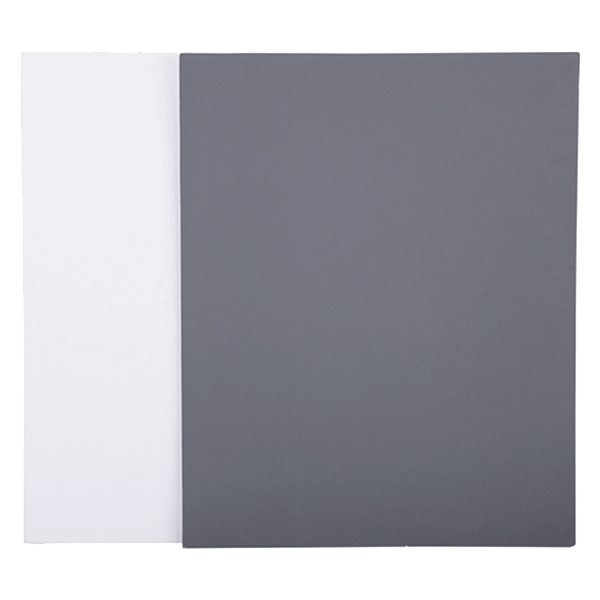
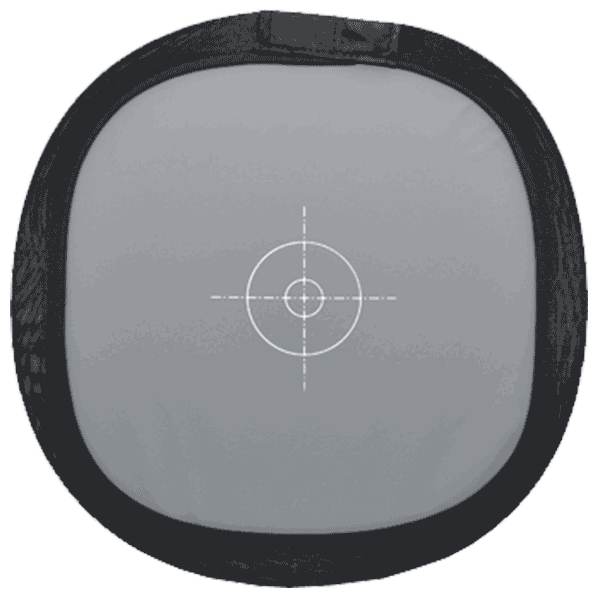
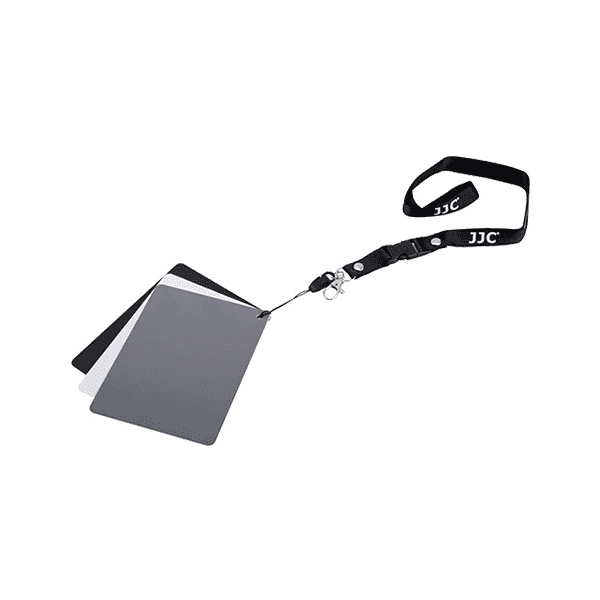
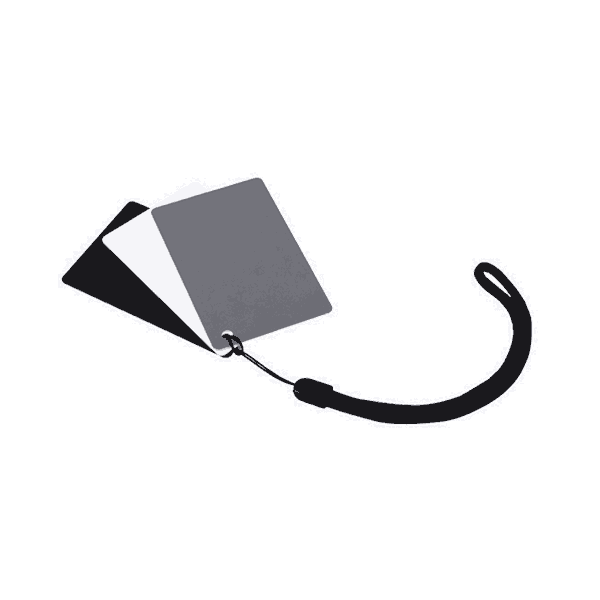
A gray card is the fastest way to get colors just right. All it takes is a reference photo taken under the existing lighting conditions, and you can later adjust the entire series to a neutral tone with a single click. Here you’ll find gray cards in 2-in-1 and 3-in-1 sets, as well as foldable versions for on-the-go use.
How to Use a Gray Card
A gray card is a surface with a defined neutral gray that has no color cast and does not reflect light unevenly. That’s exactly why it works well as a reference.
In Three Steps
Hold the card under the same lighting as your subject—not in its own light and not in the shadows—and take a photo in which the card fills a good portion of the frame. Then continue shooting as normal as long as the lighting doesn’t change. During post-processing, open the reference image, place the white balance eyedropper on the gray area, and apply that value to all images in the series. Done—all images now have neutral colors.
Gray, White, or Black?
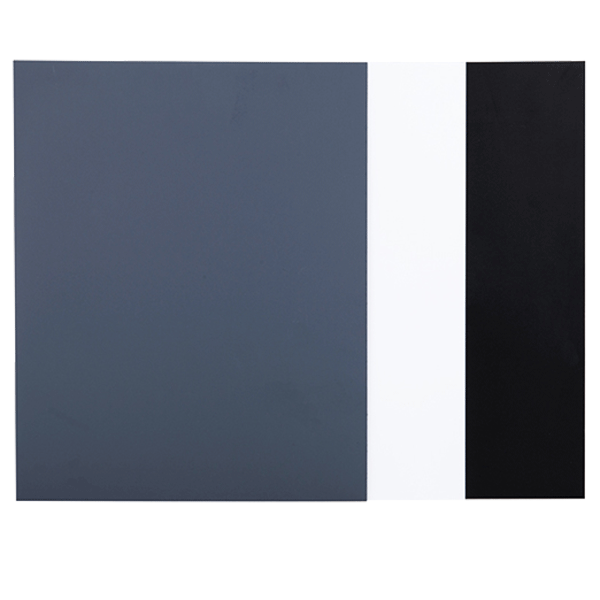
Gray is the actual reference. A white area can blow out in the shot and then no longer provide a usable reading; neutral gray stays within the safe range. The white side, on the other hand, is used to set the white point and can also serve as a small brightener. Black complements the black point and helps define the dynamic range. That’s why the cards come in 2-in-1 and 3-in-1 versions; for starters, gray and white are sufficient.
When it’s particularly worthwhile
Under mixed lighting—that is, when a window and a ceiling light are both on—automatic white balance consistently fails. The same applies under LED and fluorescent lighting with an uneven spectrum. Whenever colors must be absolutely accurate—such as in product photography, reproductions, or when clothing in a catalog needs to be exactly the right color—the card is the most cost-effective safeguard against having to redo the work. It also saves a lot of time when matching two cameras on the same job.
Practical Tips
Shoot in RAW format so that white balance adjustments later won’t compromise image quality. Foldable cards fit in your camera bag and are more durable than cardboard, which warps over time and reflects light unevenly as a result. Hold the card at a slight angle toward the light source, but not so much that it causes glare. For studio shots with softboxes, one reference per setup is sufficient; after that, the light remains constant anyway.