
Variable ND Filter
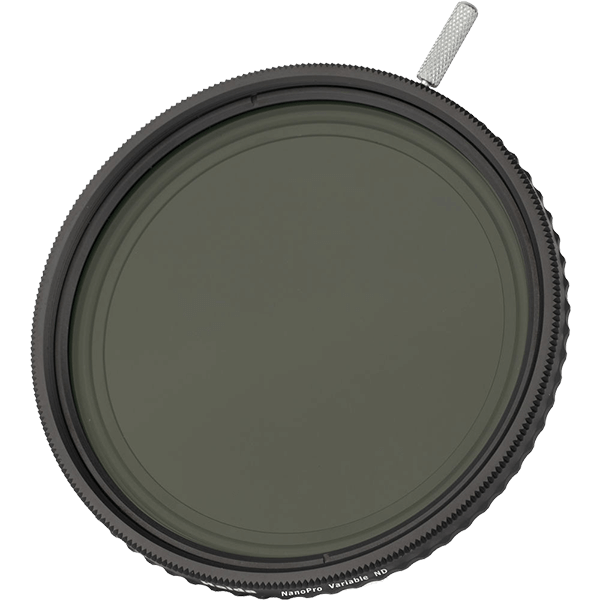
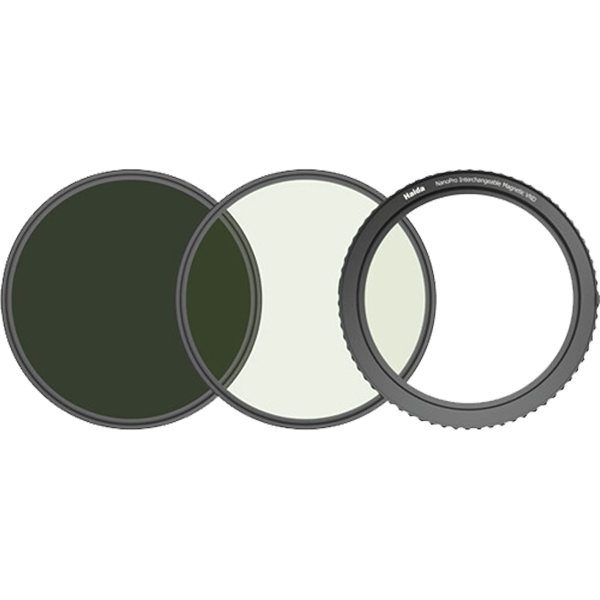
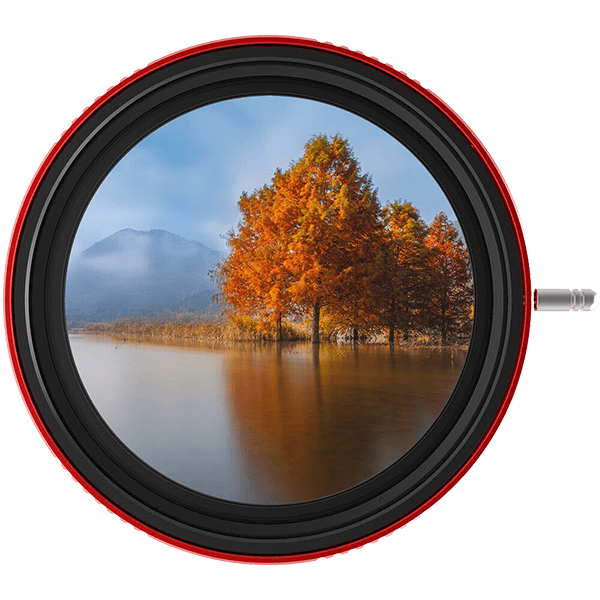
A variable ND filter covers a wide range of densities in a single filter: Simply turn the ring to continuously adjust the amount of light, instead of switching filters. Here you’ll find variable ND filters from Haida, including interchangeable versions and options combined with a polarizing filter.
When a Variable ND Filter Is Worth It
The advantage is speed; the trade-off is optical quality. Whether it’s worth it depends on what you’re doing.
Almost Indispensable for Filming
In video, the exposure time is tied to the frame rate—usually set to twice the reciprocal, i.e., 1/50 s at 25 frames per second. You must not change this time, or the motion will look incorrect. You’ll often want to keep the aperture fixed as well, since it determines the depth of field. That leaves the filter as the only control for adjusting exposure. If a cloud passes in front of the sun, you simply turn the ring instead of changing the setting. That’s why virtually everyone who films seriously has a variable ND filter on their lens.
Rarely necessary for photography
In photography, you can freely choose the shutter speed and aperture. A fixed ND filter is optically cleaner and more affordable for this purpose. A variable ND filter makes sense when you’re shooting in bright sunlight with a wide aperture and a flash, or when you need to adjust the filter’s density multiple times during a sunset without having time to change filters.
What to Look For
A variable ND filter consists of two polarizing filters that are rotated against each other. This results in two well-known effects. First: If the filter is rotated beyond its range, a dark cross appears in the image. Good models therefore have mechanical stops at both ends—make sure to check for this. Second: With super-wide-angle lenses, the darkening across the image can be uneven, for the same reason as with a polarizing filter.
A second point is the range. Filters with a very wide range—such as 1 to 8 stops—are weakest at the extremes. Models with a narrower range or with interchangeable elements for a weak and a strong range deliver more consistent results across the entire range.
Combined with a polarizing filter
Since a variable ND filter consists of polarizing filters anyway, there are models that combine both in one: polarization and light reduction, each adjustable separately. This saves one filter in the stack and thus reduces the risk of vignetting. More on polarization at Polarizing Filters.