
Screw-On Polarizing Filters
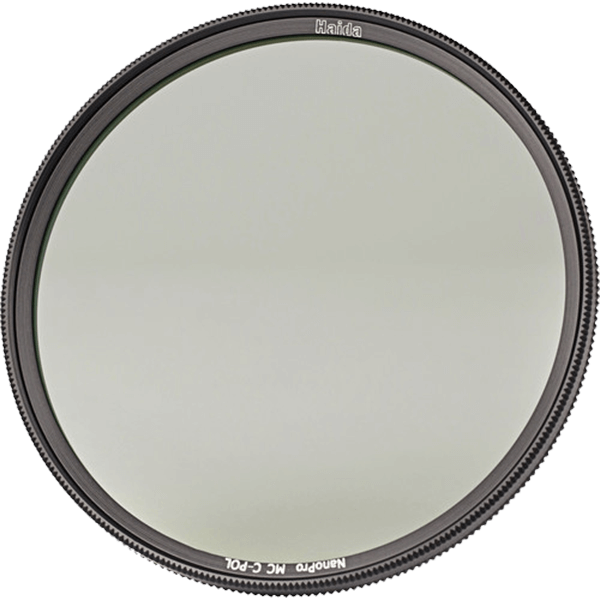
The polarizing filter is the only filter whose effect cannot be simulated in post-processing. It removes reflections from water, glass, and foliage, makes colors richer, and deepens the sky. Here you’ll find screw-on circular polarizing filters from Haida, as well as combinations of a polarizing filter and a variable ND filter in one.
How to Use a Polarizing Filter Correctly
A polarizing filter doesn’t work the same everywhere. If you know when it’s effective, you’ll get much more out of it.
The Right Angle
The effect is strongest when you’re shooting at a right angle to the sun—that is, when the sun is to the side. In contrast, if you’re facing directly toward the sun or have the sun behind you, the filter has almost no effect. Here’s a simple test: Hold out your thumb and point your index finger toward the sun. The filter works best in the direction your thumb is pointing.
Rotate until it’s right
Unlike other filters, the polarizing filter is rotated after you screw it on. Look through the viewfinder or at the display as you do this: The reflection on the water disappears at a certain point and reappears as you continue turning. It’s important to readjust the filter for each shot, because the effect changes depending on your viewing angle. A polarizing filter that you set once and then forget about won’t do any good.
A practical tip: If you’re also using a lens hood, you’ll have a hard time reaching the filter ring. Many hoods have a small window with a sliding cover for this purpose.
When to remove it
With super-wide-angle lenses, the sky can be darkened unevenly because the angle to the sun varies too much across the frame. The result is a dark spot in the blue sky that’s nearly impossible to correct. Starting at a focal length of about 16 to 20 mm on a full-frame camera, it’s therefore worth checking whether the image looks better without the filter. Second point: The filter reduces the light by one to two f-stops. In low light or if you need a fast shutter speed, remove it.
And a third point that’s often overlooked: The polarizing filter also removes the reflections that bring a photo to life. Wet leaves without any shine look flat. Full effect isn’t always best—often, half is just right.
Circular, not linear
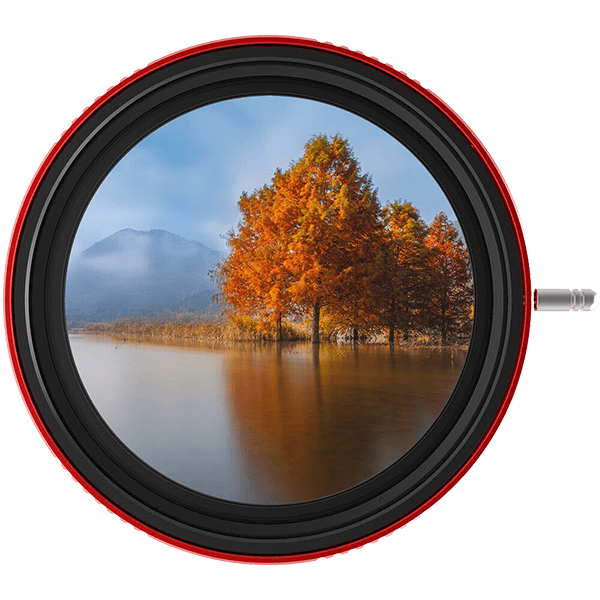
Buy a circular polarizing filter, usually labeled CPL. Linear polarizing filters interfere with autofocus and exposure metering on modern cameras. For video and any situation where you want to reduce light at the same time, there are combinations of a polarizing filter and a variable ND filter in a single unit. This keeps the stack in front of the lens thin and saves you from having to switch filters.
Size and Handling
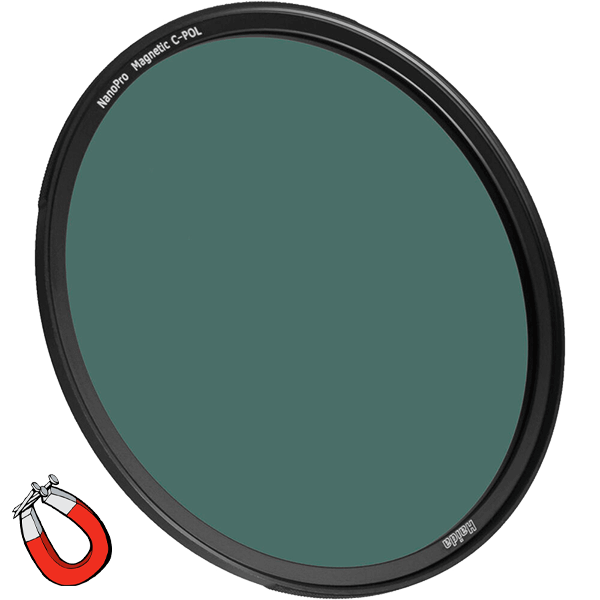
The diameter is listed on the front of your lens after the symbol ø. Buy the filter in the largest diameter you need, and adapt it to smaller lenses using step-up rings. If you frequently remove and reattach the polarizing filter, a magnetic version is faster: The adapter ring stays in the thread, and the filter attaches magnetically. If you’re already using a filter holder, you can find the right slip-on polarizing filter under Haida System Polarizing Filters.