
Screw-on ND Filters
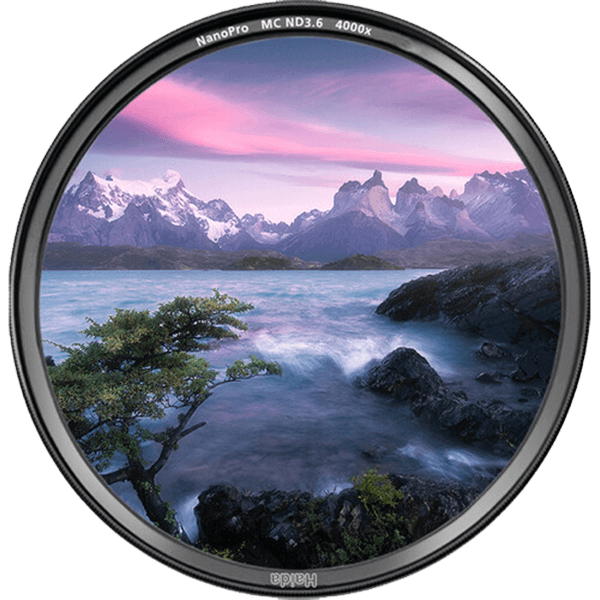
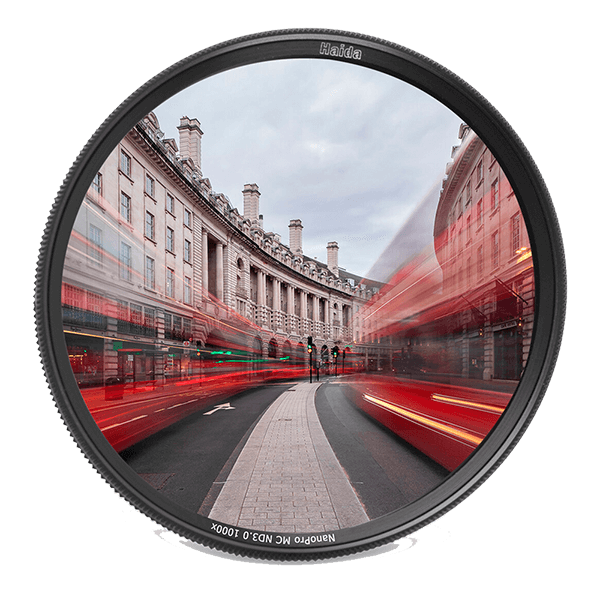
An ND filter reduces light without altering colors. This transforms waterfalls into soft veils, passing clouds into streaks, and a bustling square into an empty space. Here you’ll find screw-on ND filters from Haida in 3, 4, 6, 10, and 12 stops, in all standard diameters, and also as magnetic versions for quick changes.
What density do you need?
The density indicates the number of f-stops the filter reduces. Each stop doubles the exposure time. You’ll often see the optical density listed alongside it, such as ND0.9 for 3 stops, ND1.8 for 6, and ND3.0 for 10.
Stops in Practice
3 stops (ND0.9): A gentle introduction. On a cloudy day, it takes you from 1/60 to half a second. Often enough for streams in the forest and for shooting with a wide aperture outdoors.
4 f-stops: The middle ground when 3 is too little and 6 is too much. Especially useful at twilight, when the light is already fading.
6 stops (ND1.8): The all-rounder. If you only want to buy a single filter, get this one. It turns 1/125 into a good two seconds—enough for flowing water and the first signs of cloud movement.
10 stops (ND3.0): The classic choice for long exposures. It turns 1/125 into eight seconds. This lets you capture streaks of clouds and mirror-smooth water even in daylight.
12 stops: For bright midday light and exposures lasting several minutes, when even 10 stops aren’t enough.
A practical tip regarding high-density filters: Starting at 10 stops, you’ll see practically nothing through the viewfinder. Therefore, frame your shot and set the focus first, then switch to manual focus, and only then screw the filter onto the lens. Otherwise, the autofocus will search in vain.
The Right Size
The diameter is listed on the front of your lens after the “ø” symbol; common sizes are 49, 52, 58, 62, 67, 72, 77, and 82 mm. However, you don’t need to buy a separate filter for each lens: Choose the largest diameter you need and adapt it to all smaller lenses using step-up rings. It doesn’t work the other way around—a filter that’s too small will darken the corners of the image.
Magnetic Instead of Screw-On
Magnetic ND filters sit on an adapter ring that is screwed into the thread once. After that, the filter holds in place magnetically and can be changed in a second. This is especially convenient when you’re switching between different densities multiple times during sunset, and it also solves the problem of filters getting stuck and refusing to come loose in cold weather. You can find more information at magnetic filters.
“Color-neutral” doesn’t mean the same thing everywhere
With budget filters, “neutral” is more of a promise than a reality. Cheap ND filters have a magenta or green cast, and at f/10, this is almost impossible to correct properly. That’s why Haida’s series specify color neutrality. The extra cost is especially worth it for high-density filters, where color casts are most noticeable.
If you’re constantly changing the density
If you’re filming, you’re better off with a variable ND filter, because the exposure time is tied to the frame rate and only the filter controls the exposure. If you want to combine them with graduated filters or stack multiple filters, the plug-in filter system offers a more flexible solution.